How to Establish Tennessee Tax Residency

How to Establish Tennessee Tax Residency

A Practical Guide to Legally Positioning Yourself in a No–State-Income-Tax State

Executive Summary

Tennessee is one of the most tax-advantaged states in the United States.

  • No state income tax on wages or salaries
  • No tax on retirement income
  • No tax on investment income (Hall Tax fully repealed in 2021)

For individuals, families, and business owners—especially those relocating from high-tax states—establishing Tennessee tax residency can result in substantial long-term savings.

However:

Simply moving to Tennessee is not enough.

You must legally establish domicile and sever ties with your previous state.

This chapter outlines how to do that correctly.

1. Understanding the Core Concept: Domicile

The foundation of Tennessee tax residency is domicile.

Domicile is defined as:

Your permanent home — the place you intend to return to indefinitely.

Key points:

  • You can only have one domicile at a time
  • It is based on intent + actions
  • Physical presence alone is not enough

Why This Matters

Many high-tax states (California, New York, etc.) aggressively audit former residents.

If you do not clearly establish Tennessee as your domicile:

  • You may still owe taxes to your former state
  • You could face audits, penalties, or double taxation

2. Tennessee’s Tax Advantage

Tennessee is one of only a handful of states with:

  • No wage income tax
  • No tax on personal earnings
  • Historically low overall tax burden

This places Tennessee among the most attractive states for:

  • Remote workers
  • Business owners
  • Retirees
  • High-income earners

Important Note

Tennessee still has:

  • Sales tax
  • Property tax
  • Business taxes (for certain entities)

But overall, the absence of income tax is the primary advantage.


3. The Two-Part Residency Test

To establish Tennessee residency, you must satisfy:

1. Physical Presence

2. Intent to Remain (Domicile)


A. Physical Presence

While not always codified strictly, a common benchmark is:

  • Spending significant time in Tennessee (often ~183 days or more annually)

However:

Time alone does not establish residency.


B. Intent to Remain

This is the most important factor.

The state evaluates whether your actions show:

“This is my permanent home.”


4. Key Actions to Establish Tennessee Residency

To strengthen your claim, you should complete as many of the following as possible:


Step 1: Secure a Primary Residence

  • Purchase or lease a home in Tennessee
  • Use this address consistently

Supporting documents:

  • Lease agreement
  • Property deed
  • Utility bills

Step 2: Obtain a Tennessee Driver’s License

  • Required within ~30 days of moving
  • One of the strongest indicators of residency

Official site:
👉 https://www.tn.gov/safety/driver-services.html


Step 3: Register Your Vehicle in Tennessee

  • Transfer title and registration
  • Update insurance to Tennessee

Step 4: Register to Vote in Tennessee

  • Establishes civic and legal ties

Official site:
👉 https://sos.tn.gov/elections


Step 5: Update Your Mailing Address

  • File a USPS change of address
  • Update banks, credit cards, and subscriptions

👉 https://www.usps.com/manage/forward.htm


Step 6: Move Financial Life to Tennessee

  • Open or transfer bank accounts
  • Use Tennessee address for:
    • Brokerage accounts
    • Tax filings
    • Insurance

Step 7: Relocate Your Work & Business Connections

If applicable:

  • Change employer records
  • Register business in Tennessee
  • Update professional licenses

Step 8: Establish Community Ties

These softer factors matter more than people think:

  • Join local organizations
  • Enroll children in local schools
  • Use local healthcare providers

5. The Most Important Step: Sever Ties With Your Old State

This is where many people fail.

Even if you “move” to Tennessee, your old state may claim you are still a resident if you maintain strong ties.


You should:

  • Sell or rent out your former home
  • Cancel voter registration in your old state
  • Surrender old driver’s license
  • Move primary bank accounts
  • Avoid spending significant time there

Warning

States like California and New York are known to audit aggressively.

If they believe you never truly left:

  • They can tax your global income
  • Even years after you move

6. Documentation Checklist

To defend your Tennessee residency, maintain:

  • Tennessee driver’s license
  • Property records or lease
  • Utility bills
  • Voter registration
  • Vehicle registration
  • Bank statements with TN address
  • Tax returns showing TN residency

These documents are critical in the event of an audit.


7. Common Mistakes to Avoid

❌ “I bought a house, so I’m a resident”

Not enough without supporting actions.

❌ Keeping strong ties to a high-tax state

This can invalidate your claim.

❌ Not updating financial records

Inconsistent records raise red flags.

❌ Spending too much time out of state

May trigger residency challenges.


8. Who Benefits Most From Tennessee Residency

Tennessee is especially advantageous for:

  • High-income professionals
  • Remote workers
  • Entrepreneurs
  • Retirees with investment income
  • Real estate investors

Because:

No state income tax means you keep more of what you earn.


9. Strategic Insight: Why People Are Quietly Moving

Tennessee is part of a broader migration trend:

  • Movement away from high-tax states
  • Desire for lower cost of living
  • Search for stability and quality of life

Establishing residency here is not just a move—

It’s a financial strategy.


10. Final Thoughts

Establishing Tennessee tax residency is not complicated—

But it must be done intentionally and correctly.

The key principles are simple:

  • Be present
  • Show intent
  • Build ties in Tennessee
  • Cut ties elsewhere

Do that, and you gain access to one of the most favorable tax environments in the United States.


Disclaimer

This chapter is for informational purposes only and does not constitute legal or tax advice. Consult a qualified tax professional or attorney for guidance specific to your situation.

Tennessee as a Premier Jurisdiction for Legacy, Trust, and Tax Planning

Over the last two decades, Tennessee has quietly transformed itself into one of the most attractive jurisdictions in the United States for sophisticated trust, estate, and legacy planning. While states such as Delaware, Nevada, and South Dakota often dominate national conversations surrounding dynasty trusts and wealth preservation, Tennessee has emerged as a formidable competitor by combining favorable tax treatment, modern trust statutes, flexible asset-protection structures, and a growing ecosystem of wealth-management professionals.

This evolution is not accidental. Tennessee lawmakers, trust companies, estate-planning attorneys, and banking institutions have intentionally modernized the state’s trust laws in order to attract capital, trust administration, and multigenerational wealth. The result is a jurisdiction that increasingly appeals not only to Tennessee residents, but also to high-net-worth families across the country seeking efficient trust domicile options and long-term wealth preservation strategies.

At the same time, broader demographic and economic trends have accelerated Tennessee’s attractiveness. The migration of affluent households from high-tax states into the Southeast, the rise of remote work, and growing concerns about federal estate taxes and generational wealth transfer have all contributed to increased interest in Tennessee-based trust structures and residency planning. (Truxton Trust)

The National Context: The Great Wealth Migration

The United States is currently experiencing one of the largest interstate migrations of wealth in modern history. High-income households and business owners are increasingly relocating from states with high income taxes and aggressive estate-tax regimes into lower-tax, business-friendly jurisdictions.

Tennessee has become a beneficiary of this migration for several reasons:

  • no state income tax,
  • comparatively low cost of living,
  • strong economic growth,
  • business-friendly governance,
  • and increasingly sophisticated trust laws.

According to wealth-management and trust-industry commentary, Tennessee has positioned itself as an increasingly important destination for trust administration and wealth preservation. (Truxton Trust)

Importantly, wealthy families today often separate three concepts that historically were linked together:

  1. where they live,
  2. where their trusts are administered,
  3. and where their assets are legally domiciled.

A family may physically reside in New York or California while establishing Tennessee trusts for tax efficiency and legacy-planning purposes. Tennessee’s trust statutes are specifically designed to facilitate this modern approach to multistate wealth planning. (JD Supra)

Tennessee’s Most Significant Advantage: No State Income Tax

Perhaps the single most important factor contributing to Tennessee’s rise is its absence of state income tax.

Tennessee fully repealed the Hall Income Tax effective January 1, 2021, meaning the state now imposes no tax on:

For trust planning, this can be extraordinarily significant.

In many states, trusts are subject to state income taxation based upon:

  • trustee location,
  • situs,
  • administration,
  • or beneficiary residency.

By contrast, Tennessee’s tax environment can allow trusts to accumulate investment income without incurring state-level income taxation, particularly where beneficiaries reside outside Tennessee. (Eric Fox Law)

This creates substantial compounding advantages over time. A trust designed to preserve wealth over multiple generations benefits enormously from reducing annual tax drag. Even relatively small annual tax savings can compound into millions of dollars over decades.

For high-net-worth families, the effect is magnified when trusts hold:

  • concentrated equity positions,
  • family business interests,
  • investment partnerships,
  • private equity holdings,
  • or appreciating real estate assets.

The absence of state income tax also makes Tennessee attractive for entrepreneurs after liquidity events, such as:

  • company sales,
  • IPOs,
  • recapitalizations,
  • or private-equity exits.

In many cases, trust domicile planning may occur prior to a transaction in order to reduce state-level tax exposure on future gains.

Tennessee and Dynasty Trust Planning

Tennessee has also become a major jurisdiction for dynasty trust planning.

A dynasty trust is a long-term irrevocable trust designed to preserve family wealth across multiple generations while minimizing transfer taxes such as:

  • estate tax,
  • gift tax,
  • and generation-skipping transfer tax (GST tax). (Wikipedia)

Historically, many states limited how long trusts could remain in existence through the “Rule Against Perpetuities.” Tennessee substantially modernized this area of law in 2007 by extending permissible trust duration to 360 years. (Trust Jurisdictions)

While Tennessee does not provide perpetual-duration trusts like South Dakota or Nevada, a 360-year trust is functionally multigenerational for nearly all practical family-planning purposes.

This extended duration creates powerful long-term planning opportunities:

  • appreciation may remain outside taxable estates for generations,
  • assets may continue compounding inside protected structures,
  • beneficiaries may receive distributions without outright ownership,
  • and family governance structures may persist over centuries.

Dynasty trusts are particularly attractive in periods of elevated federal estate-tax uncertainty. Wealthy families increasingly seek to lock in exemptions and preserve appreciating assets before future federal tax-law changes.

Recent commentary from Investopedia and other planning sources highlights how dynasty trusts can substantially reduce repeated estate taxation across generations. (Investopedia)

Directed Trusts and Modern Governance Flexibility

One reason Tennessee has become competitive nationally is its embrace of modern trust governance structures.

Traditional trust arrangements often forced a single trustee to handle:

  • investments,
  • distributions,
  • administration,
  • and fiduciary oversight.

Modern wealthy families increasingly prefer “directed trust” structures that divide responsibilities among specialized parties.

Tennessee adopted robust directed-trust statutes and modern decanting laws that allow greater flexibility in administration and modification. (Trust Jurisdictions)

This allows families to separate:

  • investment management,
  • trust administration,
  • family governance,
  • and distribution decision-making.

For example:

  • a family office may manage investments,
  • a Tennessee trust company may administer the trust,
  • and an independent trust protector may oversee modifications.

These structures are especially appealing to entrepreneurial families with concentrated operating-business wealth or complex private investments.

Tennessee’s statutes also permit significant flexibility regarding trust modification through decanting provisions. Decanting allows assets from an older irrevocable trust to be transferred into a newer trust with updated terms under certain circumstances. (Trust Jurisdictions)

This flexibility is critically important because dynasty trusts may operate for generations, long after family circumstances and tax laws have changed.

Asset Protection Benefits

Asset protection is another reason Tennessee has gained national recognition.

Tennessee permits self-settled asset protection trusts, often called Domestic Asset Protection Trusts (DAPTs). These structures may allow individuals to place assets into irrevocable trusts while retaining certain beneficial interests and simultaneously protecting assets from future creditors under specific conditions. (Counsel Trust Company)

For physicians, entrepreneurs, developers, and business owners facing liability exposure, this can provide meaningful long-term protection.

However, Tennessee’s asset-protection regime is not universally viewed as the strongest in the nation. Some commentators note that Tennessee includes broader exceptions for tort creditors than states such as Nevada or South Dakota. (Trust Jurisdictions)

Nevertheless, Tennessee remains highly competitive because many families are not seeking “maximum offshore-style protection,” but rather:

  • credible domestic protection,
  • tax efficiency,
  • administrative sophistication,
  • and jurisdictional stability.

In that regard, Tennessee performs extremely well.

Family Business and Partnership Planning

Recent Tennessee legislation has further strengthened the state’s attractiveness for family-business planning.

In 2024, Tennessee enacted important trust and partnership-law reforms that may improve valuation-discount opportunities for family-controlled partnerships under federal estate and gift-tax rules. (Holland & Knight)

Valuation discounts can significantly reduce taxable values for:

  • closely held business interests,
  • family investment entities,
  • limited partnerships,
  • and family holding companies.

This area of planning is especially important for wealthy families attempting to transition operating businesses between generations while minimizing estate-tax exposure.

The legislation reflects Tennessee’s broader strategic pattern: continuously modernizing statutes to remain nationally competitive in wealth-planning markets.

Indeed, Tennessee trust law is updated frequently. Trust-industry professionals often note that Tennessee legislators actively collaborate with banks, trust companies, and estate-planning attorneys to refine the state’s trust code on an ongoing basis. (Pendleton Square Trust)

This adaptability is itself a competitive advantage.

Tennessee as a Trust Domicile

Increasingly, Tennessee is selected not merely as a residence state, but as a trust domicile.

Trust domicile—or trust situs—determines which state’s laws govern a trust. For sophisticated families, choosing situs can be as important as choosing investment strategy.

Key considerations include:

  • income-tax treatment,
  • trust duration,
  • asset protection,
  • fiduciary flexibility,
  • privacy,
  • judicial environment,
  • and administrative efficiency.

Tennessee compares favorably across nearly all categories. (Trust Jurisdictions)

To establish Tennessee situs, planners commonly utilize:

  • Tennessee trustees,
  • Tennessee trust companies,
  • Tennessee administrative offices,
  • or Tennessee-directed trust structures.

The state has also cultivated a growing professional ecosystem supporting these arrangements:

  • private trust companies,
  • estate-planning law firms,
  • family-office advisors,
  • and fiduciary specialists.

Cities such as Nashville, Franklin, Chattanooga, and Knoxville increasingly host sophisticated wealth-management infrastructure that historically concentrated in older financial centers.

Wealth Migration Into Tennessee

Beyond technical trust advantages, Tennessee benefits from broader economic momentum.

The state continues attracting:

  • entrepreneurs,
  • healthcare executives,
  • entertainment professionals,
  • logistics companies,
  • retirees,
  • and high-income remote workers.

Nashville in particular has become a major center for:

  • healthcare wealth,
  • private equity,
  • venture-backed founders,
  • and family-office expansion.

As wealthy families move to Tennessee physically, they often also restructure:

  • residency,
  • trusts,
  • partnerships,
  • and estate-planning frameworks.

This creates reinforcing momentum:
wealth migration fuels trust-industry growth, which in turn attracts more wealth-management infrastructure.

Tennessee Compared to Other Leading Trust States

Tennessee is frequently compared with:

  • South Dakota,
  • Nevada,
  • Delaware,
  • Wyoming,
  • and Alaska.

South Dakota is often viewed as the gold standard for perpetual dynasty trusts and aggressive asset protection. Nevada is known for privacy and strong DAPT statutes. Delaware benefits from longstanding corporate and trust jurisprudence.

Tennessee differentiates itself by combining:

  • favorable taxes,
  • modern statutes,
  • business growth,
  • livability,
  • and geographic accessibility.

For many families, Tennessee feels more operationally practical and culturally familiar than some alternative jurisdictions.

Additionally, Tennessee offers advantages for families that genuinely intend to relocate or maintain meaningful physical presence. Unlike purely technical trust jurisdictions, Tennessee increasingly functions both as:

  • a legitimate residential destination,
  • and a sophisticated trust-administration center.

Legacy Planning Beyond Taxes

Importantly, modern legacy planning is no longer solely about tax reduction.

Increasingly, wealthy families seek structures that:

  • preserve family values,
  • reduce future conflict,
  • protect immature beneficiaries,
  • support philanthropy,
  • and maintain continuity across generations.

Modern trust structures allow families to define:

  • governance systems,
  • educational incentives,
  • charitable goals,
  • investment philosophies,
  • and distribution standards.

As commentary on legacy planning increasingly emphasizes, the purpose of sophisticated planning is not merely preserving money, but preserving continuity, identity, and long-term stewardship. (Investopedia)

Tennessee’s flexible trust framework supports these broader goals exceptionally well.

Conclusion

Tennessee’s rise as a trust and legacy-planning jurisdiction reflects a deliberate and highly strategic evolution. By eliminating state income tax, modernizing trust statutes, embracing directed trusts and decanting, extending trust duration, and continuously refining its legal framework, Tennessee has positioned itself among the nation’s leading jurisdictions for multigenerational wealth planning.

At the same time, larger demographic and economic shifts continue to strengthen Tennessee’s appeal. Wealth migration into the Southeast, concerns about future federal taxation, and the increasing sophistication of family-office planning have all elevated Tennessee’s importance within the national estate-planning landscape.

For wealthy families, entrepreneurs, and multigenerational business owners, Tennessee now offers a compelling combination of:

  • tax efficiency,
  • legal flexibility,
  • trust sophistication,
  • asset protection,
  • and long-term legacy preservation.

While South Dakota, Nevada, and Delaware remain important competitors, Tennessee has established itself as a uniquely balanced jurisdiction—one capable of serving both as a residence state and as a premier domicile for trusts designed to preserve wealth for generations to come.

References

  1. Tennessee Dynasty Trust Laws – Trust Jurisdictions
    (Trust Jurisdictions)
  2. Holland & Knight – Tennessee Trust Bill Takes Effect and Makes Important Changes
    (Holland & Knight)
  3. Diversified Trust – Advantages of Tennessee Trust Law
    (Diversified Trust)
  4. Cumberland Trust – 2025 Tennessee Trust Code Updates
    (Cumberland Trust)
  5. Pendleton Square Trust – New Tennessee Trust Legislation
    (Pendleton Square Trust)
  6. Truxton Trust – The Migration
    (Truxton Trust)
  7. Counsel Trust Company – The Tennessee Advantage
    (Counsel Trust Company)
  8. JD Supra – Tennessee Further Solidifies Itself as a Top State for Trusts
    (JD Supra)
  9. Investopedia – Dynasty Trusts: The Quiet Tool for Preserving Wealth for Generations
    (Investopedia)
  10. Investopedia – The Sophisticated Legacy Plan
    (Investopedia)

Top 10 Secret Things to Do in Tennessee You Must Experience

Life Hacks, Fitness Videos, Courses, Meditation, and more Life Hack Protocol

Tennessee is famous for Nashville music, Memphis barbecue, and the Great Smoky Mountains—but beyond the postcards lies a deeper, more surprising Tennessee. Hidden trails, underground worlds, forgotten towns, and experiences most travelers never hear about.

If you want to experience Tennessee like a local (or an explorer), these are 10 secret things you absolutely must do.


1. Kayak Through the Bioluminescent Waters of Nickajack Cave

📍 Near Chattanooga

At certain times of the year, paddling into Nickajack Cave at dusk reveals a surreal phenomenon: thousands of synchronized bats emerging overhead while the water below glows faintly from bioluminescent organisms.

It’s quiet. It’s eerie. It’s unforgettable—and still unknown to most visitors.

Pro tip: Go with a guided night kayak tour for safety and timing.


2. Explore the Lost Town of Elkmont

📍 Great Smoky Mountains National Park

Hidden within the Smokies is Elkmont, an abandoned resort town frozen in time. Once a booming vacation retreat for wealthy families, it now stands quietly reclaimed by nature.

Walk through empty cabins, old hotels, and moss-covered foundations—especially magical in spring when synchronous fireflies light up the forest.


3. Descend Into the Forbidden Caverns

📍 Sevierville

While tourists flock to well-known caves, Forbidden Caverns offers dramatic rock formations, ancient Native American artifacts, and fewer crowds.

The lighting, underground streams, and sheer scale make it one of the most underrated geological experiences in the Southeast.


4. Visit the Ghost Town of Rugby

📍 Upper Cumberland Plateau

Founded in the 1880s as a utopian experiment, Rugby was meant to be a perfect society. It failed—but what remains is hauntingly beautiful.

Stone cottages, old churches, and Victorian architecture tell stories of idealism, struggle, and ambition.

It feels like stepping into a forgotten chapter of American history.


5. Swim in the Blue Hole at Cummins Falls (Off-Trail Route)

📍 Cookeville

Cummins Falls is popular—but the real magic is the hidden blue hole upstream, accessible only via a rugged hike.

Crystal-clear water, cliff jumps, and total immersion in nature make this one of Tennessee’s best-kept secrets.

⚠️ Check weather conditions—flash flooding can be dangerous.

Life Hacks, Fitness Videos, Courses, Meditation, and more Life Hack Protocol


6. Walk the Underground City of Chattanooga

📍 Downtown Chattanooga

Beneath the streets lies remnants of an older city—abandoned tunnels, sealed storefronts, and hidden passageways from the early 1900s.

Some areas are accessible via historical walking tours or special events. It’s urban archaeology at its finest.


7. Discover the Bell Witch Cave at Night

📍 Adams

One of America’s most famous—and unsettling—hauntings, the Bell Witch Cave is less touristy than expected.

Visiting after sunset (legally, with permission) offers an atmosphere that’s deeply chilling—even if you’re skeptical of the paranormal.

Whether haunted or not, the history alone is worth it.


8. Watch the Sunrise from Max Patch (When It’s Empty)

📍 Near the NC Border

Max Patch is known—but most people visit midday. Arrive before dawn and hike in darkness to witness a sunrise that feels almost unreal.

Rolling grassy bald mountains stretch endlessly, and you’ll likely have it entirely to yourself.


9. Eat at a True Appalachian “Meat & Three” That Locals Guard

📍 Small towns across TN

Skip the famous spots. Ask locals where they eat.

Hidden diners across Tennessee serve legendary meat & three meals—fried chicken, turnip greens, cornbread, and desserts that taste like family history.

If the menu is handwritten and cash-only, you’re in the right place.


10. Drive the Natchez Trace at Night (Safely)

📍 West & Middle Tennessee

Most people drive it during the day—but at night, the Natchez Trace Parkway feels timeless.

No billboards. No city lights. Just moonlit road, stars, and a sense that you’ve slipped out of modern life.

Pull over at a scenic overlook and just listen.


Final Thoughts: Tennessee Rewards the Curious

Tennessee isn’t just a destination—it’s a layered experience. The deeper you go, the more it reveals.

If you slow down, explore side roads, talk to locals, and step off the obvious path, you’ll discover a Tennessee most people never see—and never forget.

✨ Sometimes the best adventures aren’t advertised.

Watch our video:

Life Hacks, Fitness Videos, Courses, Meditation, and more Life Hack Protocol

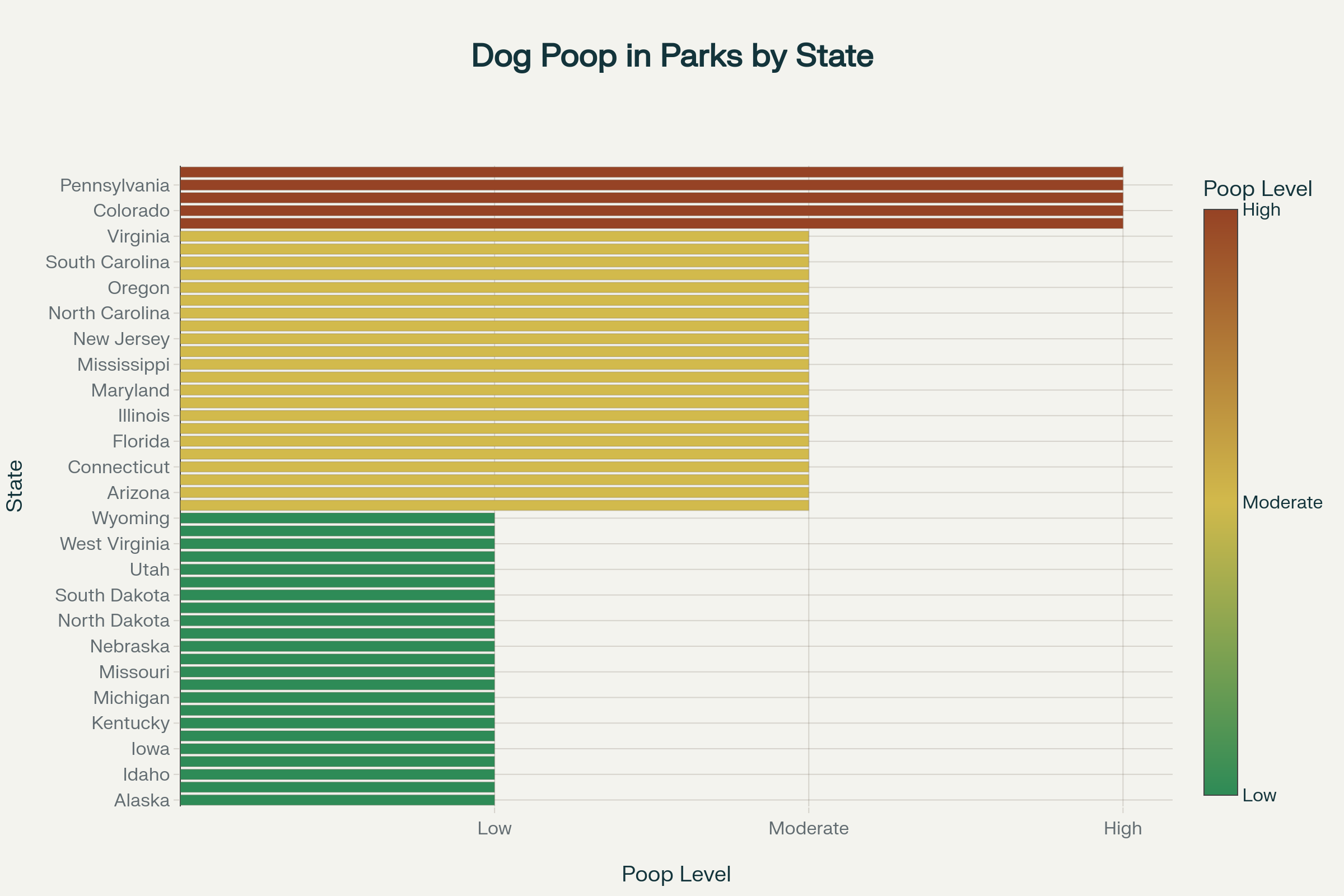
What are the chances of stepping on Dog Poop in your local park, in your state?

This content created by Maximus AI Workhorse, a Macro Tech Titan Product

The available data on dog poop in public parks by state or city mostly comes from complaints, surveys, and small-area studies rather than comprehensive statistics on dog poop density per square foot in every state. For example, Pittsburgh Pennsylvania ranks as the top city for dog poop complaints, followed by Colorado, Seattle, Atlanta, and San Francisco, with many issues related to off-leash dog areas and owner responsibility. Scientific studies from urban parks (like in Calgary, Canada) show that off-leash parks tend to have significantly higher fecal contamination, with spatial variation related to park entrances and parking lot proximity.barkpotty+1

National surveys suggest that the South ranks second in public dog park conditions, with mixed reports on cleanliness and owner behavior, while the Midwest ranks highest for best public parks. The West is noted for the lowest dog park safety and cleanliness rankings. However, there is no direct, comparable dataset quantifying dog poop density per square foot for all states, including Tennessee.sniffspot

Methodology Proposal (Based on Available Research):

  1. Collect dog poop complaint data and survey responses related to dog waste management by state/city.
  2. Incorporate scientific studies’ findings that relate dog waste density to park policies (off-leash vs. on-leash).
  3. Use dog population data and park area sizes per state to estimate dog poop per square foot in public parks.
  4. Highlight factors influencing contamination like leash policies, accessibility, and owner behavior.

States with Noted Dog Poop Issues (Qualitative Ranking):

RankState/CityNoted Issue
1Pennsylvania (Pittsburgh)Top dog poop complaints (“Poopsburgh”)
2ColoradoMost dog poop complaints, many off-leash parks
3Washington (Seattle)Complaints due to unclear rules
4Georgia (Atlanta)Large off-leash areas, poop management challenges
5California (San Francisco)High dog density, busy urban setting
TennesseeNo specific comprehensive data but likely reflects national trends

Limitations:

  • No exact square-foot data per state found to generate precise chart or map.
  • Proxy metrics from complaints and research suggest regional tendencies but lack uniform measurement.

If needed, an estimated color-coded map would look like this:

  • Brown: Pennsylvania, Colorado, Washington, Georgia, California (most dog poop presence)
  • Yellow: South and some Mid-Atlantic states (moderate issues)
  • Green: Midwest (cleanest by survey), parts of Northeast (lowest dog poop complaints)

Such a map and chart would be best theoretical or modeled from compiled complaint data, dog population density, and park area.

Given the lack of direct granular data, care is required when interpreting results or comparing states like Tennessee to others. More targeted data collection by states or national surveys could fill this gap in the future.

This answer synthesizes available information on dog poop distribution in U.S. parks and suggests a methodology for quantitative assessment despite data limitations.nature+3

  1. https://barkpotty.com/blogs/bark-blog/the-top-5-u-s-dog-poop-capitals
  2. https://www.nature.com/articles/s41598-023-30225-7
  3. https://www.sniffspot.com/blog/sniffspot-community/the-state-of-public-dog-parks-across-the-united-states
  4. https://www.nrpa.org/parks-recreation-magazine/2018/november/dogs-in-parks-managing-the-waste/
  5. https://www.bowwowwaste.com/dog-waste-program-guide/
  6. https://lispartnership.org/2024/12/pet-waste-pollutes/
  7. https://www.nps.gov/articles/000/chat_nrca_ecoli2023.htm
  8. https://js.sagamorepub.com/index.php/jpra/article/view/9059
  9. https://stormwatercoalition.org/petwaste
  10. https://lnt.org/wp-content/uploads/2018/10/2_2_18_OSMP_Pet_Waste_Final_Report-1-201802051053.pdf

The Data

Here is a theoretical, data-guided map estimating the relative prevalence of dog poop per square foot in public parks by state for 2025. States like Pennsylvania, Colorado, Washington, California, and New York are marked as having the highest prevalence due to urban density and high complaint rates, while much of the Midwest and rural states like Wyoming and Nebraska are lowest. Tennessee is in the lower-to-moderate range based on pet ownership and park cleanliness trends. The methodology combines dog population, complaint data, park rankings, and public reports.

Estimation Methodology

  • Used urban dog poop complaint prevalence, pet ownership rates, and public park cleanliness rankings.
  • Grouped states into three bands: brown (most), yellow (moderate), and green (least) based on available indicators.
  • Tennessee’s rating is supported by moderate pet ownership and a lack of high complaint levels in surveys.

Map: Estimated Dog Poop Density in US Parks

Estimated Dog Poop Density in US Public Parks (2025)

Limitations

  • Map is theoretical due to lack of precise, quantitative data for every state.
  • Regional variance within states is masked—urban hotspots may not represent entire states.

This presentation synthesizes public complaints, urban cleanliness studies, and pet ownership statistics to estimate relative risk across the US.

​This content created by Maximus AI Workhorse, a Macro Tech Titan Product

Checkout the Love TN Life Shop